
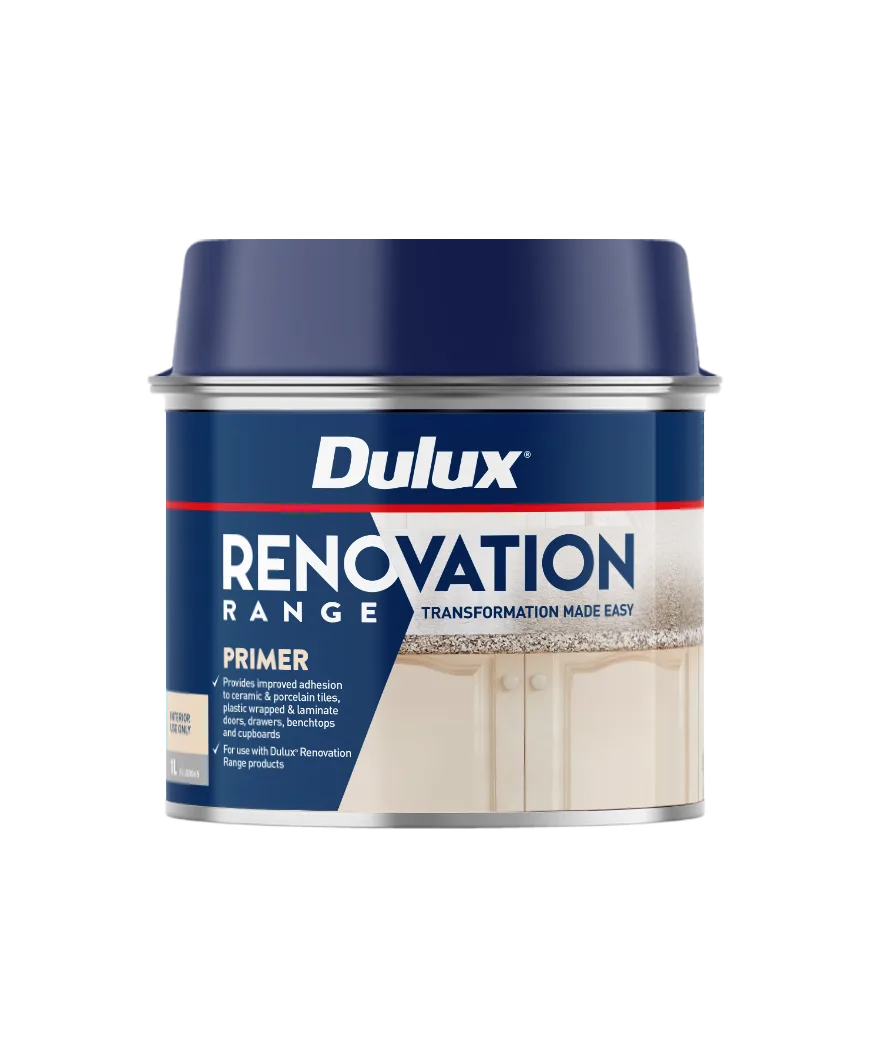

Dulux Renovation Range Primer is a revolutionary, water-based primer that is the perfect preparation product for ceramic and porcelain tiles, vinyl, laminate and plastic wrapped cabinet doors, drawers and benchtops.

Touch Dry
30 minutes

Re-coat
4 hours

Cleaning materials
Water
Application Tools
Brush, Roller
Suitable for interior use only
Under cooler or humid conditions allow longer drying times. Surface temperature must be above 10°C during application and drying. Avoid application when air or surface temperature is below 10°C or above 30°C and ensure that the product is not applied in direct sunlight. For best results use Renovation Range Primer on all surfaces before topcoating with Renovation Range topcoats.
Adherence to minimum recoat times
Ensure that minimum recoat times are rigidly followed. Early recoat will result in gloss reduction.
Use of Renovation Range Primer before applying Renovation Range Cabinet Doors reduces the likelihood of gloss reduction in the topcoats. Mask up areas not requiring coating with a good quality masking tape. Take care to cover all areas as it will be difficult to remove paint once cured.
Dulux Renovation Range Primer requires a clean surface to adhere. All grease, silicone and dirt contamination must be removed, or the primer will not adhere and will peel or flake off.
To remove silicone:
1. Apply Selleys Silicone remover and allow it a suitable time to soften the silicone.
2. Remove the softened Silicone with a grout and sealer removal tool.
3. Mechanically scrape the joint until all signs of silicone are removed.
4. Take a piece of p400 paper and work it into and along the joint to abrade both sides of the joint and remove remaining silicone sealant on the surface.
5. Clean the joint with a scouring pad and Selleys Sugar Soap until clean.
6. Rinse with clean water and allow to dry. The surface is now ready to paint.
Important: Do not use abrasive cleaning detergents.
Previously painted surfaces
On all surfaces, cleaning is the most important step. Scrub down with Selleys® Sugar Soap and rinse with clean water to remove any dirt, oil or grease. Use a plastic scouring pad on heavily contaminated surfaces. Repeat this process using clean water, at least twice.
Important: Do not use abrasive cleaning detergents. Completely remove any loose and flaking paint. Fill any cracks or holes with a suitable hard epoxy based filler such as Selleys KneadIT® Aqua. Sand glossy and semi gloss finishes to a dull flat finish using p400 paper before coating. Use a clean damp cloth to remove any dust. Mask using a good quality painters tape
Laminate cabinet doors
Clean using Selleys Rapid Mould Killer. Remove all silicone sealant from joints on all surfaces using Selleys Silicone Remover. Wash down well with water. Sand with p400 paper in all areas where silicone has been removed. Wash with Selleys Sugar Soap. Rinse with clean water and dry with a clean cloth. Use a steel wool pad to lightly abrade laminate surfaces. Use a clean damp cloth to remove any sanding dust. Mask using a good quality painters tape then prime using Renovation Range Primer.
Vinyl & plastic surfaces
Follow preparation of laminate cabinet doors. Apply Dulux Renovation Range Primer before applying topcoat. Mask using a good quality painters tape.
Wall and floor tiles, glass splashbacks
For grout lines ensure to remove all grease and oil
Thoroughly clean surface using Selleys® Rapid Mould Killer™. Remove all silicone sealant from joints using Selleys® Silicone Remover
Wash down well with water
Sand with p400 paper all areas where silicone has been removed
Wash with Selleys® Sugar Soap and use a scrubbing brush or a toothbrush to properly clean grout lines Rinse with clean water and dry with a clean cloth
Allow grout lines to dry for a minimum 2 hours before painting. Mask using a good quality painters tape
Brush, Roller, conventional spray or airless spray application.
Stir thoroughly before and during use.
After the additive has been added and stirred, apply at least one coat of Dulux Renovation Range Primer.